Summer Safety Tips for Families in Danbury and Candlewood Lake: Heat, Water, and Outdoor Activities

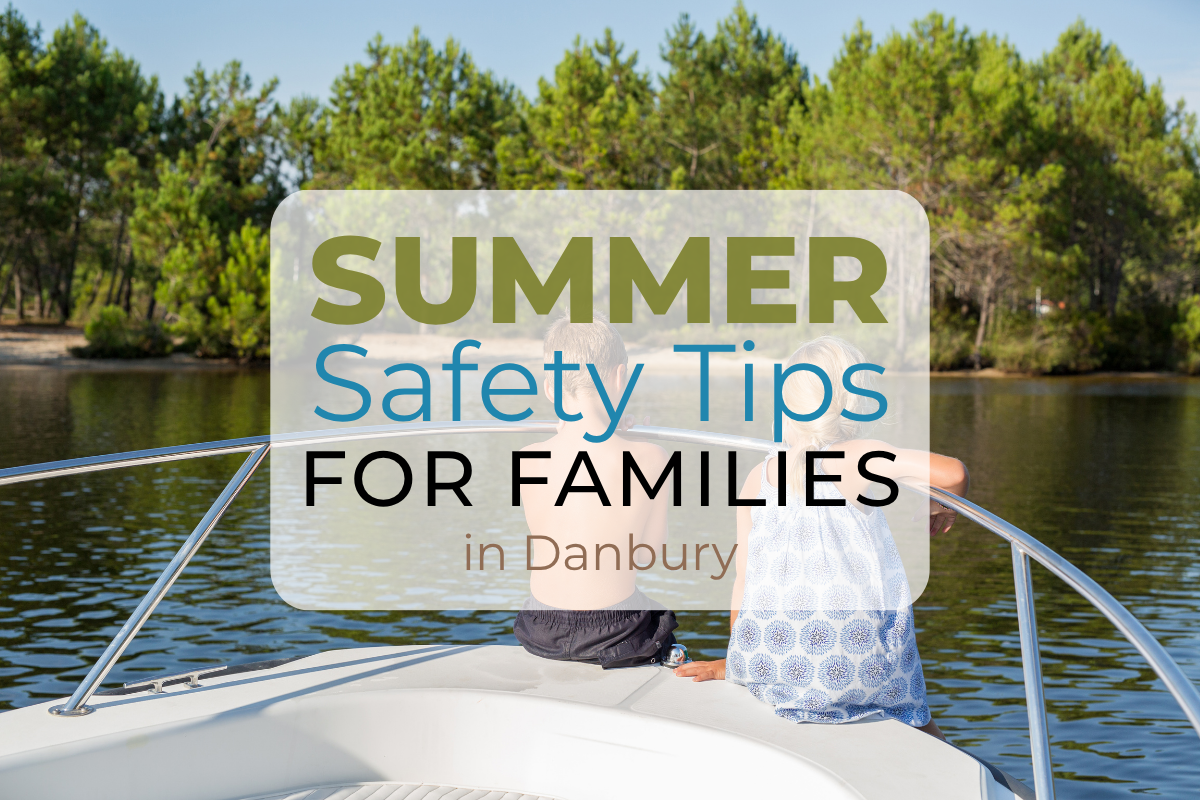
Danbury and Candlewood Lake · Community Photo
Summer in Danbury and the Candlewood Lake area is built around the lake — boating, swimming, and waterfront life that define the season here. That lake-centered lifestyle comes with specific safety considerations that differ from a typical backyard pool, alongside the standard heat and sun precautions every family needs. Here is the complete guide.
Heat Safety: New England's Increasingly Hot Summers
Connecticut summers have grown noticeably warmer and more humid in recent years, and families shouldn't assume New England heat is automatically mild. According to the EPA, children's smaller body mass relative to surface area makes them more vulnerable to heat illness than adults, regardless of regional climate norms. According to pediatric heat illness guidance, heavy sweating, weakness, and dizziness signal heat exhaustion — move the child to shade or air conditioning and offer cool fluids. A temperature above 104°F with confusion is heat stroke, a 911 emergency requiring immediate active cooling. According to the CDC, never leave children in a parked car, even on a seemingly mild Connecticut day — vehicle interiors heat up rapidly regardless of outside temperature.
Water Safety: Candlewood Lake's Specific Risks
Candlewood Lake — Connecticut's largest lake at over 8 miles long — carries safety considerations distinct from a backyard pool. The lake is spring-fed and stays notably colder than air temperature suggests, even in midsummer, which can cause sudden muscle fatigue or shock in swimmers who underestimate the temperature difference. Boat traffic is heavy throughout the summer season, making visibility and designated swim areas important for families with young children. According to the CDC, life jackets should be worn for all boating activities and by weaker swimmers in open water — not just held in reserve for emergencies. According to the American Academy of Pediatrics, constant active supervision and properly fitted U.S. Coast Guard-approved life jackets are essential at the lake, and according to the CDC, drowning remains the leading cause of death for children ages 1 to 4 nationally — a risk that applies fully to lake environments, not just pools.
Sun Protection: Don't Underestimate New England Sun
According to Nemours KidsHealth, broad-spectrum SPF 30 or higher, reapplied every two hours and after swimming, is the standard recommendation regardless of how mild the climate feels. Families spending full days on the water at Candlewood Lake — where sun reflects off the lake surface and adds to direct exposure — should treat lake days with the same sun protection seriousness as a beach day. According to the FDA, broad-brimmed hats, rash guards, and limiting exposure during the 10 a.m. to 2 p.m. peak window provide protection beyond sunscreen alone, particularly relevant for boat days where shade is limited.
Neighborhood Preparedness: Lake Community Awareness
The Candlewood Lake Authority actively manages water quality and safety conditions across the lake's five bordering towns, and many lakefront communities maintain informal awareness networks — neighbors who know each other's docks, boats, and routines well enough to notice if something seems off. For families new to lake living, learning the location of the nearest designated swim area, confirming life jacket sizes for each child before the season starts, and discussing boat traffic patterns with experienced neighbors are practical steps that build genuine safety knowledge specific to Candlewood Lake.
Learn more about healthy summer living on Discover Danbury and Candlewood Lake. Looking for a family-focused community? Connect with Lisa Weisenberger at Luks Realty.
Sources: epa.gov — Protecting Children from Extreme Heat, swpedi.com — Heat Exhaustion vs. Heat Stroke in Children, cdc.gov — Infants and Children and Heat, cdc.gov — Preventing Drowning, healthychildren.org — Water Safety and Young Children, cdc.gov — Summer Swim Safety, kidshealth.org — How to Choose and Use Sunscreen, fda.gov — Sunscreen Guidance